
Health library
Back to health libraryWhat to do if your child might have measles
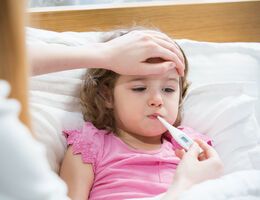
May 4, 2026—If your child had measles, you'd recognize it right away from the classic rash, right? And then you'd know to stay at home to keep others from getting sick.
Actually, spotting measles early can be tricky. The measles rash doesn't appear until later. Instead, you might think your child has the flu.
But recognizing a possible case of measles early is important. Measles is so contagious that 9 out of 10 unvaccinated people who are exposed to the virus will get it. That makes it the most contagious virus humans get, according to the National Foundation for Infectious Diseases. An infected child can spread the virus up to four days before the telltale rash appears.
The measles vaccine is more than 97% effective, according to the Association of American Medical Colleges (AAMC). So vaccinated kids are much less likely to get measles.
But if your child hasn't been vaccinated or there's an outbreak nearby, knowing the early symptoms is important.
Spot the early signs of measles
Measles symptoms can appear a week or two after a person is infected, the Centers for Disease Control and Prevention (CDC) reports. At first, a child might have:
- A cough.
- A fever.
- A runny nose.
- Red, watery eyes.
- Tiny white spots in the mouth (about two to three days after the first symptoms).
Three to five days after the first symptoms, a rash may appear. Flat red spots may form on your child's face, often near the hairline. The spots may then spread to other areas of the body.
A child with measles can spread the disease up to four days before and after the rash appears, the AAMC reports.
If you suspect measles
If you think your child might have measles, everyone in your household should stay home. Try to keep your child away from other family members who aren't sick.
Call your child's healthcare provider right away. You can tell them about your child's symptoms and get advice. We don't have antiviral drugs to treat measles, but you can take steps to help your child feel better. For instance, your provider might recommend that you give your child plenty of fluids to stay hydrated or recommend over-the-counter fever remedies.
If possible, your provider might offer you a telehealth visit to review your child's symptoms remotely.
If you want to take your child to a clinic or a hospital, call ahead. Let them know you suspect measles. That gives them time to take steps to protect other people there, including those who might be especially vulnerable to measles, like babies too young to be vaccinated, pregnant women and people with weakened immune systems.
When to go to the emergency room
For most children, the worst part about measles is how it makes them feel. But in rare cases, children who get measles may develop serious complications, such as pneumonia or encephalitis (swelling of the brain). Kids with these complications may need to be hospitalized.
According to CDC, you should seek emergency care immediately if your child's measles symptoms get worse rapidly or if they have any of these signs or symptoms:
- Trouble breathing or rapid breathing.
- Pain when breathing or coughing.
- Signs of dehydration, such as a dry nose and mouth, urinating less than usual, or crying without tears.
- A fever or headache that doesn't go away.
- Confusion, decreased alertness or severe weakness.
- Blue color around the mouth.
- Low energy or problems with feeding in a young child.
The power of prevention
You can help keep your child from getting measles and other preventable illnesses by making sure they're up-to-date on recommended childhood vaccines, including the measles vaccine. If you have questions about measles or the measles vaccine, ask your child's healthcare provider.
Sources
- American Medical Association. "Measles Resources." https://www.ama-assn.org/public-health/infectious-diseases/measles-resources.
- American Red Cross. "Measles Continues to Spread—What You Need to Know." https://www.redcross.org/about-us/news-and-events/news/2019/u-s-measles-outbreak-what-you-should-know.html.
- Association of American Medical Colleges. "Measles Cases Are on the Rise. Here's What You Need to Know." https://www.aamc.org/news/measles-cases-are-rise-here-s-what-you-need-know.
- Center for Infectious Disease Research & Policy. "Are Your Symptoms Caused by the Flu or Measles? What to Do Before Going to the Doctor." https://cidrap.umn.edu/measles/are-your-symptoms-caused-flu-or-measles-what-do-going-doctor.
- Centers for Disease Control and Prevention. "Do You Think Your Child Has Measles?" https://www.cdc.gov/measles/downloads/measles-factsheet-seek-care-508.pdf.
- Centers for Disease Control and Prevention. "Measles Clinical Diagnosis Fact Sheet." https://www.cdc.gov/measles/media/pdfs/2024/08/measles-clinical-diagnosis-fs.pdf.
- Centers for Disease Control and Prevention. "Measles Symptoms and Complications." https://www.cdc.gov/measles/signs-symptoms/index.html.
- National Foundation for Infectious Diseases. "Frequently Asked Questions About Measles." https://www.nfid.org/resource/frequently-asked-questions-about-measles .